Better for patients. Better for hospitals. Fairer for society.
The shift
Around 146 million outpatient appointments are booked annually in England. Around 33 million of them are never attended, split roughly evenly between patients who could not come, patients who cancelled and hospital cancellations. Patient cancellations alone rose 18% in 2024/25.
In the United States, average no-show rates run at about 23%, and considerably higher in safety net and Medicaid populations. No one counts it nationally, so no health system can say with confidence what it is costing them.
For a long time this was treated as the cost of running a health service. Hospitals built coping strategies around it: expensive outreach, traditional overbooking and quite often just hope.
But the unused capacity is visible now, and patients can be found to take the slots. What used to be unavoidable has become a coordination problem, and coordination problems can be solved.
Patients who miss appointments have worse health outcomes. Hospitals and staff are under real operational and financial pressure. Solving both at once is why Deep Medical exists.
NHS England Digital, Hospital Outpatient Activity 2024-25. Dantas LF, Fleck JL, Cyrino Oliveira FL, Hamacher S. No-shows in appointment scheduling, a systematic literature review. Health Policy 2018; 122(4): 412 to 421.
The origin
Deep Medical began in 2020, out of the NHS Clinical Entrepreneur Programme and OptimalAI, our CEO’s prior company. We wanted to know why patients miss appointments they actually want to attend. So we asked them.
In our first work with Mid and South Essex we spoke to more than two thousand patients. One told us her short term memory made it hard to hold on to the date. Another said the journey took two hours each way and she had the school run to think about. Hardly any of it was a decision not to come.
None of it was beyond fixing either. These were problems of coordinating timing and of how people were being contacted. That is what we built the company to solve.
Why it stayed broken
Appointments move, patients cancel at short notice, and a clinic three days out looks nothing like the clinic that was booked. There was never enough time in a booking office to work through that volume, and there still is not. So hospitals absorbed it, because absorbing it was the only thing available.
What we are doing about it
Our job is to close the gap between what a hospital books and what it delivers, so capacity that would have gone unused is used and more patients are seen sooner.
We process the operational and contact data needed to schedule and communicate about appointments. We do not use clinical records, diagnoses or treatment information to build our models.
We are not determining patient pathways, and we do not make decisions about anyone's care. That is the clinician's job.
Who runs the company
David Hanbury MEng MSc,
Chief Executive Officer
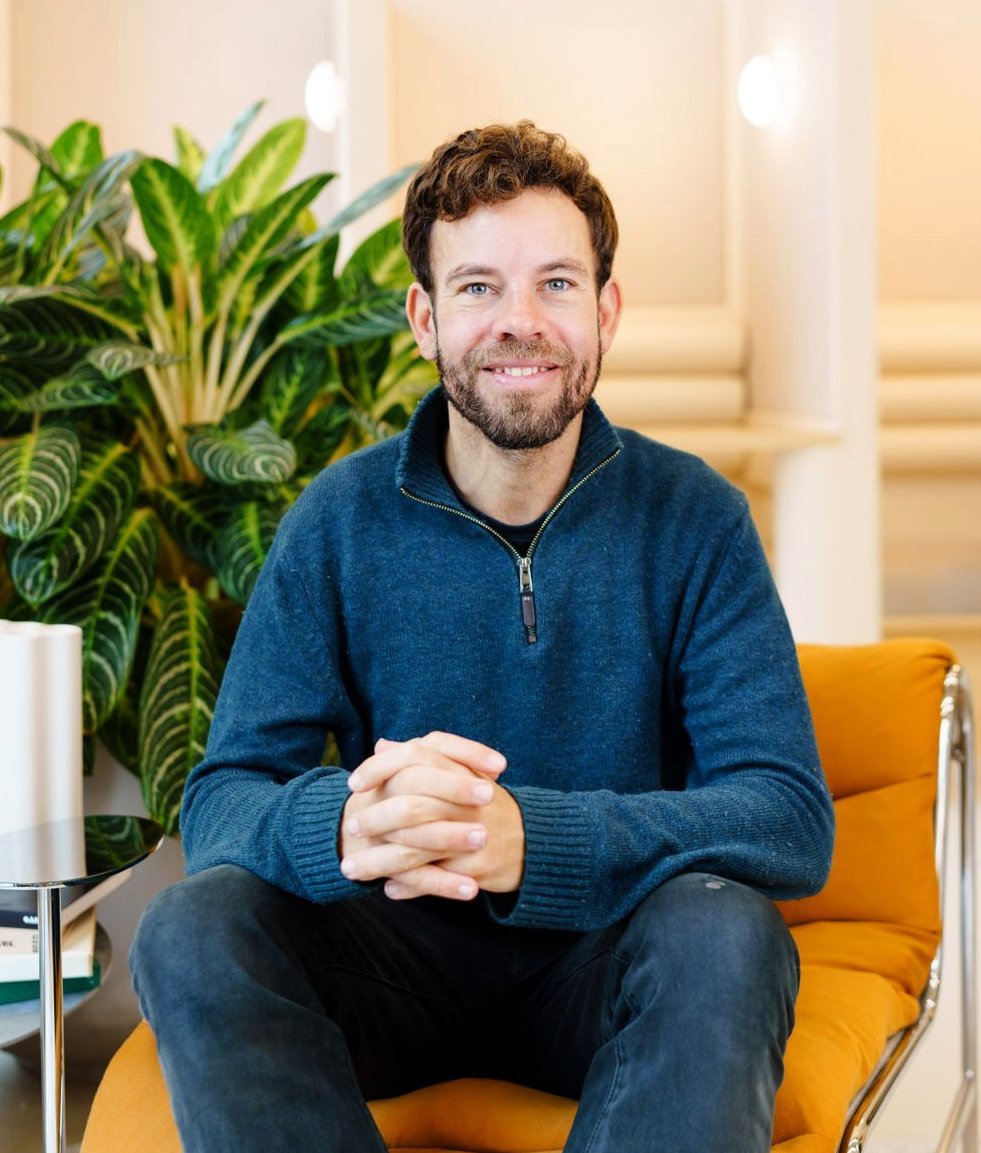
David is Chief Executive Officer of Deep Medical and leads the machine learning work. He has spent over 18 years building AI.
Prior to Deep Medical, David was Chief Executive of OptimalAI and he has worked with early stage prediction companies in agriculture and commodities. He has been building AI algorithms since 2009. David is an honorary staff member of the computer science department at UCL and sits on the department's advisory board. He began his career at JP Morgan and later managed a hedge fund.
At Oxford, he won the BP prize for best performance in engineering and was nominated for the national Science, Engineering and Technology Student of the Year Award. The automated machine learning system he developed is used by the United Nations Industrial Development Organisation. Additionally he holds a masters degree with distinction from UCL in Data Science and Machine learning.
The people and institutions behind the company
Mid and South Essex NHS Foundation Trust are our founding client and have supported our work from the very beginning. Their teams helped shape how the system works, and new capability is still built and tested with them. What began as a six month pilot became a twelve month contract and is now a three year partnership covering their 1.2 million outpatient appointments a year.
Our advisory board is led by:
Sir David Sloman, formerly Chief Operating Officer of NHS England, knighted in 2017 for his services to the health service.
Sir Thomas Hughes-Hallett, founder and chair of Helpforce and former chair of Chelsea and Westminster Hospital NHS Foundation Trust.
Professor Lord Tarassenko CBE FREng FMedSci is the first president of Reuben College, Oxford. He is a world-leading expert in the application of signal processing and machine learning to healthcare, with a strong track record in translation to clinical medicine.
We are a Friend of UCL Computer Science, and we sponsor MSc projects in artificial intelligence at UCL and the University of Oxford.
Everything we claim on this site can be checked. Our security, data protection and compliance position is set out in full in our Trust Centre.

Our partners